La Llorona (The Weeping Woman) is a famous Hispanic folklore figure, a ghostly woman who drowned her children in a fit of rage after being abandoned by her husband and now endlessly wanders near water, weeping and searching for them, often bringing misfortune or even kidnapping other children who hear her mournful cries. The legend varies but centers on a woman named Maria, a jealous outburst, and a tragic drowning, with her spectral presence serving as a cautionary tale, often linked to indigenous history or a universal “white lady” ghost archetype.
The Core Story
- Maria: A beautiful, often poor woman who marries a wealthy man.
- Betrayal: Her husband grows neglectful or leaves her for a younger, richer woman, often after they have children.
- The Act: In a moment of rage, jealousy, or despair, she drowns her children in a river.
- Grief & Curse: Realizing her horrific mistake, she drowns herself or dies of grief, but is denied entry to heaven until she finds her children, becoming the weeping spirit.
Common Variations & Themes
- Motivations: Sometimes she drowns them to “save” them from her abusive husband, other times out of drunken neglect, or as revenge against a conquistador lover (like Malinche).
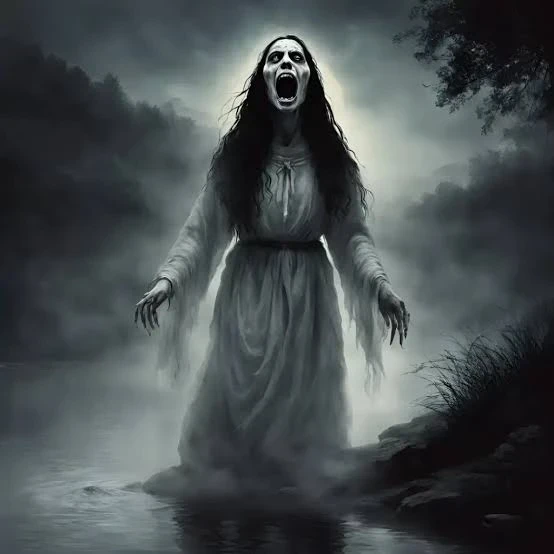
- Her Appearance: A pale woman in white, often with long dark hair, seen near water (rivers, creeks).
- Her Cry: Her wails are said to sound closer when she is near, and those who hear them risk misfortune, death, or even having her mistake them for her own children.
- Cultural Roots: The legend is deeply embedded in Latin American culture, sometimes linked to Aztec goddesses or colonial history, and appears in many forms across the Americas.
Modern Interpretations
- She’s seen as a cautionary tale about motherhood, infidelity, or cultural conflict.
2. Her legend has inspired films, songs, and even Halloween attractions, evolving beyond its traditional folk roots.