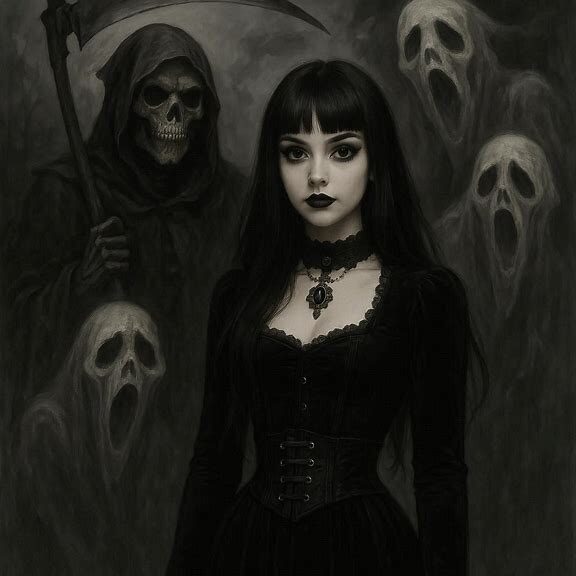
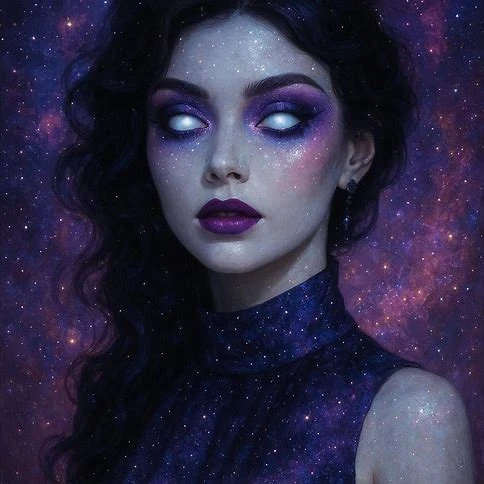
Hello! I’m Amanda, the founder of Paranormal Chic. I wear many hats as a fashion enthusiast, beauty lover, and paranormal explorer. My website, Paranormal Chic, is the culmination of these passions, aimed at weaving together style and the supernatural in an exciting way.
From a young age, the paranormal intrigued me. I grew up in a house that was, believe it or not, haunted. Ghostly encounters were just part of my daily life. That fascination never faded, leading me to collect haunted dolls and dive deeper into the world of spirits.
But this isn’t just about ghostly tales. Fashion and beauty have always been close to my heart. I’m here to bridge these realms, offering you unique insights and tips that blend the ethereal with the chic.
On Paranormal Chic, you’ll not only find thrilling paranormal stories but also fashion advice and beauty tips. It’s about bringing a touch of mystery into everyday life, making the ordinary extraordinary.
Cooking, writing, and drawing are some of my other passions. They inspire my content, helping me create a platform that’s not just engaging but also offers something a little out of the ordinary. I’m passionate about helping others explore the paranormal while enhancing their fashion and beauty routines.
The mission of Paranormal Chic is to assist you in exploring new dimensions of style and mystique. I invite you to join me on this adventure, where we can dress up our lives with a little magic.
Are you ready to unlock the doors to a world where fashion meets the supernatural? Great! Let me guide you through this unique blend, starting with how my childhood experiences shape the narratives you find on Paranormal Chic.
When I was little I lived in an apartment that was haunted. My older sister got dragged into our bathroom after she used it.
When I was a teenager I would be inspired to watch makeup tutorials on youtube and would also see beauty tips and would put on makeup the way they did. Also buy beauty products that I saw from the beauty tips.
History of Fashion
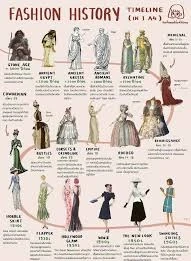
Fashion history shows clothing evolving from basic protection (Ancient Times) to status symbols (Rome), religious modesty (Middle Ages), aristocratic display (17th-18th C), industrial mass production (19th C), youth expression/rebellion (1960s/70s), and digital-age fast fashion (21st C), reflecting societal shifts, technological advances, and cultural movements, with key periods like the Flapper era (1920s), Dior’s New Look (1950s), and Grunge (1990s) defining decades through silhouette, fabric, and social commentary.
Ancient Times to Middle Ages
Early Humans: Clothing began as animal skins, leaves, or grass for protection, with early sewing needles appearing around 30,000 BC.
Ancient Civilizations (Egypt, Rome): Clothing like tunics and togas signified status, with silk and elaborate jewelry reserved for elites; fashion was a clear social marker.
Middle Ages: Focus shifted to religious modesty, covering the body, with strict rules but also the introduction of luxury fabrics like silk for the wealthy.
Renaissance to 18th Century
Renaissance: Clothing rules were strict, but more people gained access to fabrics like wool and linen; the wealthy used fashion to display power.
17th-18th Centuries: Baroque and Rococo styles brought elaborate gowns, wigs, and formality, but also saw women adopting men’s styles for riding, influencing later unisex trends.
19th Century: Industrialization &
Victorian Era
Industrial Revolution: Led to mass production, making fashion accessible beyond the elite, and the rise of haute couture in France (late 1800s).
Victorian Era: Marked by conservative styles, full skirts, and long sleeves, reflecting traditional values, though the 1890s saw early adoption of androgynous flapper styles.
20th Century: Revolution & Modernity
1920s (Flapper): Shorter hemlines, bold accessories, and rebellion against traditional norms.
1940s (WWII): Utility, practicality, and military influences led to simpler, more functional clothing.
1950s (Dior’s New Look): Return to feminine elegance with defined waists and longer skirts, alongside youth subcultures.
1960s (Youthquake): Mini skirts, bright colors, and hippie styles challenged norms.
1980s (Excess): Bold, oversized clothing reflecting economic recovery.
1990s (Grunge): Ripped clothes, flannel, and a casual, punk aesthetic.
21st Century: Digital & Sustainable
2000s: Rise of fast fashion and online shopping.
2010s-Present: Social media drives trends, focus on sustainability, comfort, minimalism, and vintage revivals.
History of The Paranormal
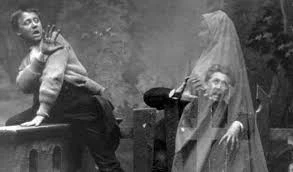
Paranormal history spans from ancient ghost stories in Mesopotamia and Rome, featuring restless spirits and haunted houses, to the 19th-century Spiritualism movement, which embraced séances, Ouija boards, and early technology like the telegraph to contact the dead, evolving into modern paranormal investigation with scientific tools, all rooted in humanity’s enduring fascination with life after death and the unknown.
Ancient Roots
Mesopotamia (8000–2000 BCE): The earliest written accounts, like the Epic of Gilgamesh, describe spirits interacting with the living, often warning of the underworld’s darkness.
Ancient Greece & Rome: Ghosts were common, with tales of vengeful spirits haunting places, exemplified by Pliny the Younger’s famous story of a rattling ghost leading to buried bones, a classic “haunted house” narrative.
Medieval & Early Modern Eras
Folklore: Ghost stories became embedded in global cultures, often featuring historical figures and mysterious deaths, serving as cautionary tales or expressions of unresolved grief.
Biblical Views: Scriptures warned against seeking spirits, emphasizing devotion to God.
The Spiritualist Boom (19th Century)
Technological Influence: Innovations like the telegraph and phonograph spurred interest in communicating with the dead, as people sought ways to bridge the gap between worlds.
Séances & Mediumship: This era saw the rise of public séances, automatic writing, and Ouija boards, as mediums claimed to channel spirits, says the Science History Institute.
Modern Paranormal
Scientific Approaches: The 20th and 21st centuries brought technology like EMF meters, thermal cameras, and audio recorders to investigate alleged hauntings, moving toward more “scientific” methods.
Pop Culture: Movies like Paranormal Activity, while fictional, tap into these long-standing cultural beliefs and fears of the supernatural.
History of Beauty

Overall, my mission is to help people with investigating the paranormal, share my experiences, help with fashion wear, and help with beauty tips.
If you have any questions or comments, please leave them down below and I would be happy to help out.